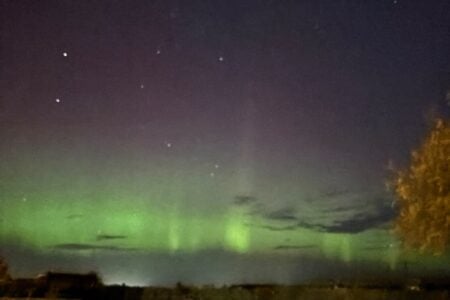
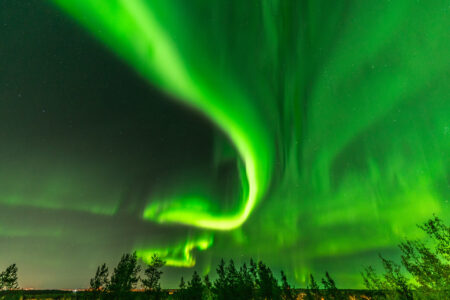
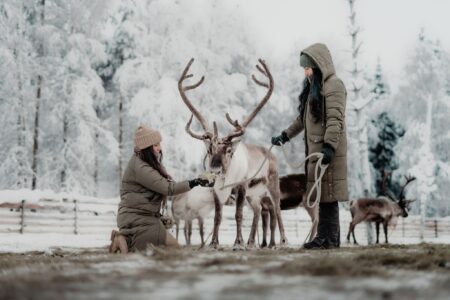
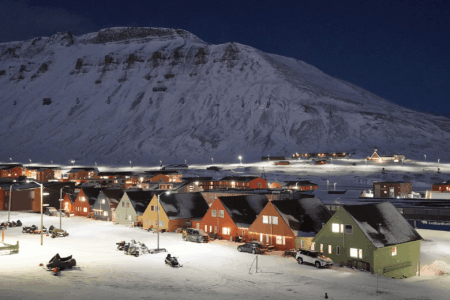
When most people think about seeing the Northern Lights, they picture deep snow, freezing temperatures and the long winter nights of December, January and February. But October is one of the most interesting months to visit the Arctic, offering excellent Northern Lights opportunities alongside beautiful autumn landscapes and generally milder temperatures.
As the Nordic summer gives way to autumn, the nights grow noticeably darker, the forests begin their transition towards winter and the Northern Lights become a regular feature of the Arctic night sky.
At Aurora Nights, we’ve spent more than 15 years specialising in luxury Northern Lights holidays across Norway, Sweden, Finland and Iceland. With our team living and working in the Nordics, we experience the changing seasons firsthand and know just how rewarding an October Northern Lights holiday can be.
October Brings Longer, Darker Nights
The most important requirement for seeing the Northern Lights is darkness.
Although the Aurora occurs throughout the year, the Midnight Sun and extended daylight hours of the Nordic summer make it impossible to see displays during the brightest months.
By October, darkness has returned to the Arctic, and the nights become progressively longer as the month continues.
In northern Norway, Sweden and Finland, this creates several hours of darkness each evening, providing plenty of opportunities to watch for the Northern Lights.
Unlike the deep winter months, October still offers useful daylight hours for exploring the surrounding landscapes, enjoying outdoor activities and visiting local communities.
You can spend your day hiking through autumn forests, kayaking on a quiet lake or discovering local food before returning to your accommodation as darkness settles across the landscape.
It’s a wonderful combination of autumn days and Northern Lights evenings.
Why Autumn Can Be Particularly Good for Aurora Activity
There’s another interesting reason why October deserves attention.
Research has shown that geomagnetic activity tends to increase around the spring and autumn equinoxes.
The autumn equinox falls in September, but the seasonal enhancement in geomagnetic activity is not limited to a single day.
This pattern is partly associated with the Russell McPherron effect, which describes how the orientation of Earth’s magnetic field relative to the solar wind can favour stronger geomagnetic disturbances at certain times of year.
These disturbances can create favourable conditions for Northern Lights displays.
However, it’s important to understand that greater geomagnetic activity doesn’t guarantee you’ll see the Aurora.
The Kp index, solar wind conditions, cloud cover and your exact location all influence what may be visible on any particular evening.
Even when the Kp index is relatively low, beautiful Northern Lights displays can appear in destinations beneath the auroral oval.
Autumn Colours and Northern Lights Reflections
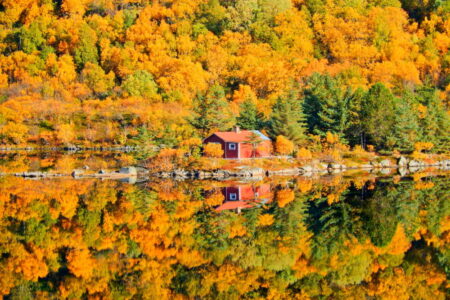
One of the most appealing reasons to visit the Arctic in early autumn is the landscape.
Across Sweden and Finland, the forests and surrounding countryside change colour as the seasons turn.
In Finland, this colourful period is known as ruska, when the birch forests, shrubs and ground vegetation turn shades of yellow, orange and red.
The most intense colours often arrive in September in the far north, although some autumn scenery can remain into October, depending on the location and weather.
In Norway, golden forests contrast with dramatic mountains, fjords and the first snow appearing on higher ground.
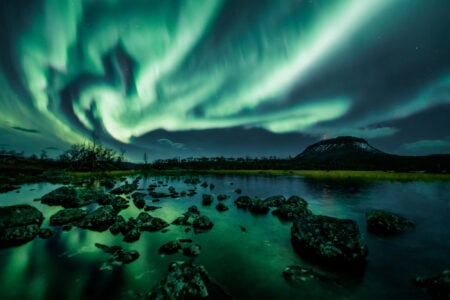
Perhaps one of the most beautiful features of autumn Aurora viewing is the possibility of seeing the Northern Lights reflected in the still waters of an unfrozen lake.
Before winter ice forms, the green lights can appear both above you and across the surface of the water, creating wonderful opportunities for photography.
It’s a completely different Northern Lights experience from standing beneath snow covered trees in February.
Why Cloud Conditions Matter More Than You Might Think
One of the biggest misconceptions about Northern Lights viewing is that a high Aurora forecast automatically means a successful evening.
You might have a Kp index of 6, suggesting considerable geomagnetic activity, but if thick clouds cover the sky, the display can remain completely hidden.
Equally, you might have a Kp index of just 2 or 3 and enjoy beautiful Northern Lights beneath clear Arctic skies.
This is why cloud cover is one of the most important factors when planning an Aurora excursion.
October weather can be changeable across the Nordics. Coastal areas of Norway and Iceland can experience unsettled weather, while conditions further inland may be quite different.
Local forecasts are particularly valuable because cloud cover can vary significantly between nearby locations.
Our experienced private Northern Lights guides understand these regional differences and can use local weather information to identify more promising viewing areas.
Sometimes moving away from cloudier coastal conditions towards clearer inland skies can make a real difference.
However, no destination can guarantee clear skies, and even the most carefully planned excursion remains dependent on the weather.
Where Should You See the Northern Lights in October?
Each Nordic country offers something different during October.
Sweden: The areas around Kiruna, Abisko and the wider Arctic wilderness offer dark skies, beautiful landscapes and opportunities to combine Northern Lights viewing with hiking, private dining and secluded accommodation.
Finland: Northern Finnish Lapland, particularly around Inari, Saariselkä and Ivalo, provides excellent opportunities for autumn Aurora viewing, with forest landscapes, wilderness retreats and glass roof cabins.
Norway: Tromsø, Alta and the Lyngen Alps combine Northern Lights opportunities with spectacular mountains, fjords and coastal scenery. Private guides can help you explore beyond the towns in search of clearer skies.
Iceland: October offers the opportunity to combine Northern Lights viewing with waterfalls, geothermal lagoons, volcanic landscapes and beautiful countryside accommodation.
The right choice depends on your preferred scenery, accommodation and daytime experiences, as well as your appetite for exploring different parts of the Arctic.
Using Aurora Buddy to Follow the Forecast
Understanding when conditions might be favourable is an important part of Aurora hunting.
Our CEO, Jonny Cooper, developed the Aurora Buddy app to simplify complex Northern Lights information into an accessible Aurora Score.
By bringing together factors such as space weather, cloud cover and moonlight, the app helps travellers identify promising viewing windows without needing to interpret numerous scientific forecasts.
It’s another useful resource alongside the knowledge of our local guides, particularly during October when changing weather can influence viewing opportunities.
Experience October in the Arctic with Aurora Nights
October offers a Northern Lights holiday with a different character from the traditional winter season.
There may not be deep snow or frozen lakes, but instead you’ll find autumn landscapes, darker evenings, opportunities for outdoor exploration and the possibility of watching the Aurora reflected in open water.
At Aurora Nights, we create tailor made holidays that combine carefully selected luxury accommodation, private Northern Lights experiences and local knowledge built over more than 15 years.
We generally recommend staying for at least three or four nights, allowing several opportunities to watch the sky and greater flexibility around changing weather conditions.
Because October isn’t simply the beginning of the Northern Lights season. It’s a wonderful time to discover the Arctic before winter fully arrives.